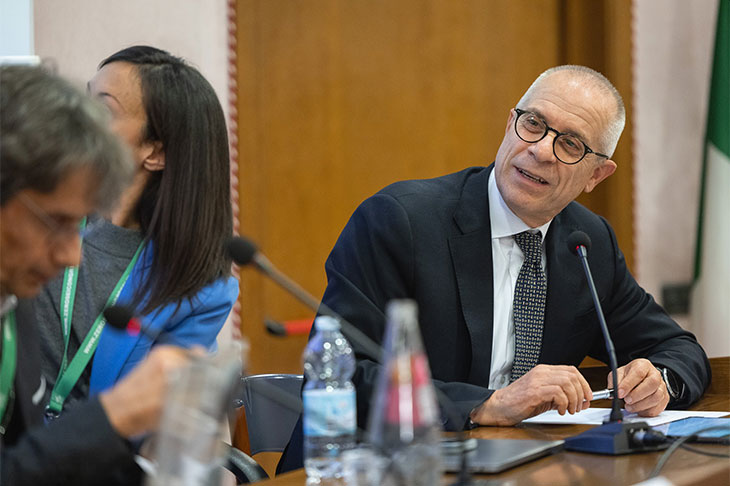
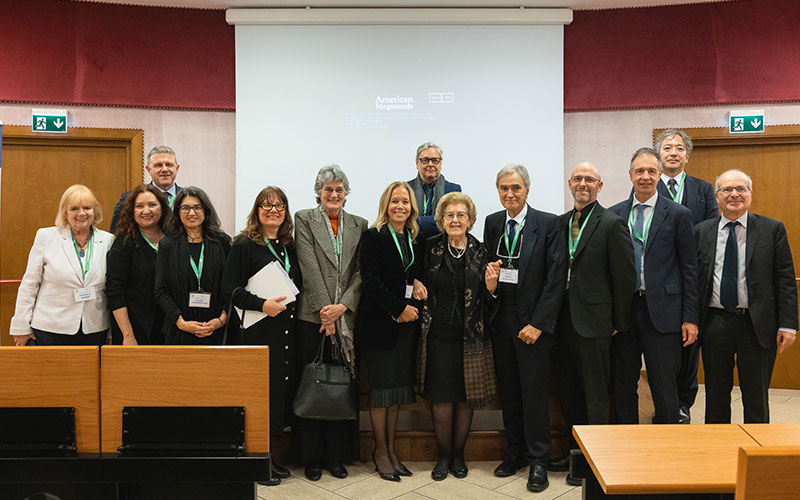
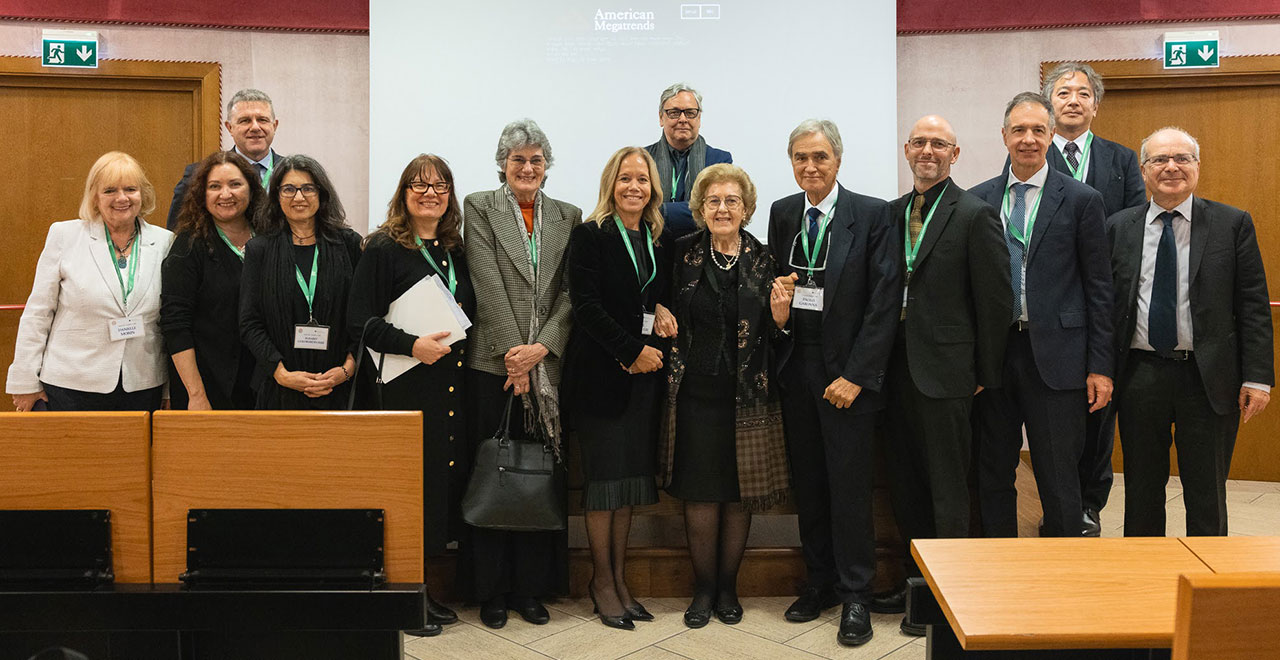
The first session, moderated by Andrea Monda, Director of L'Osservatore Romano, began with the presentation of the research paper “Artificial Intelligence and Care of Our Common Home” by Anna Maria Tarantola, who then spoke with co-authors Joseph Bonnici, Andrea Cosentini, Clarisse De Souza, Xavier Ferràs Hernàndez, Andrea Gaggioli, Elisabet Golobardes Ribé, William Hasselberger, Edgar Lyra, Mario A. Maggioni, Alejandra Marinovic, Mirella Mastretti, Giacomo Mazzone, Danielle Morin, Tetsuo Morishita and Giulia Schneider.
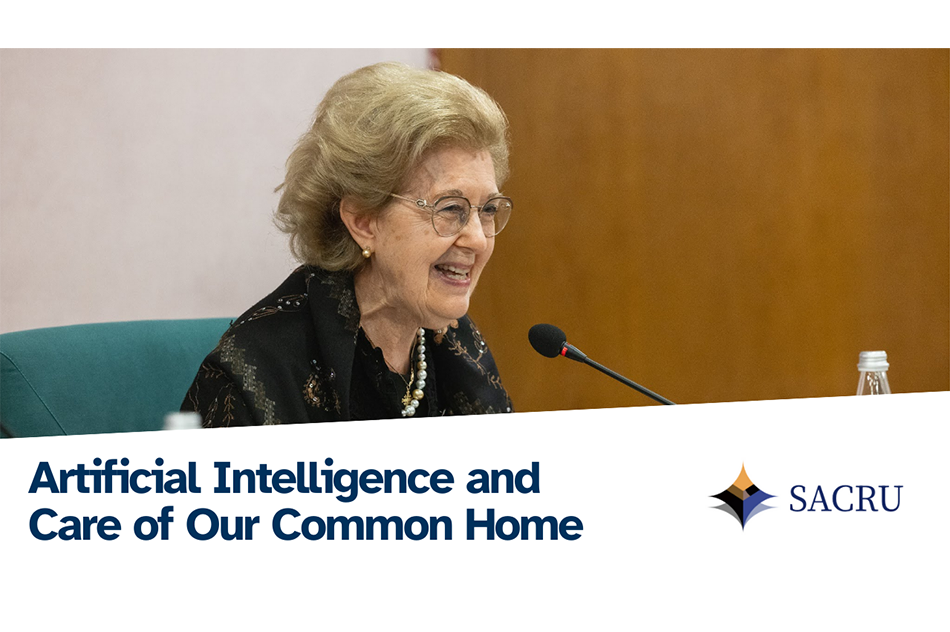
“The collection of contributions published is driven by a fundamental question in understanding and managing the potential harms of artificial intelligence: ‘What is AI for?’”, began Anna Maria Tarantola. Does AI serve humanity, improve well-being and support the integral development of individuals or does it primarily serve to enrich and consolidate the power of a few technological giants despite the risk of undermining humanity? This research addresses this question through a cross-disciplinary and anthropocentric approach, offering an in-depth analysis of how AI is conceived, developed and used. A multidisciplinary analysis is crucial because technological evolution is fundamentally changing how we perceive experiences such as procreation, birth and death (as noted by Pope Francis at the XVII Inter-Christian Symposium, 28th August 2024). All contributions in this volume,” she continued, “are guided by ethical evaluation and inspired by the Social Doctrine of the Church (SDC), aiming to identify the most appropriate paths forward, even if this includes setting limits to innovation when it harms humanity. Science is not neutral, and neither is AI.”
“Our work for an AI that serves humanity and our common home doesn’t end here,” concluded Anna Maria Tarantola. “The complexity of the relationship between technological innovation and the humanity makes future lines of research necessary. I recall some of them: the study of the psychological and identity-related effects of interactions with generative systems and immersive environments (e.g., the metaverse); the analysis of the impact of regulatory policies (EU AI Act, UN guidelines, etc.) on the effective protection of people, especially children’s rights and eventually need of new regulation; an in-depth exploration of ‘AI literacy’ as a key competence for digital citizenship with particular attention to minors and most vulnerable groups; comparative investigations to understand how the dignity is expressed in different cultural and educational contexts; identifying whether and at what point to stop in the innovation process by evaluating the impact on the very existence of human beings; how to integrate technology and the human sciences, recovering the humanistic dimension of culture in a world increasingly characterized by a post-human culture in which people risk becoming obsolete; initiating a broad philosophical movement to understand the influence of the rapid and pervasive development of AI, especially generative AI, on the deepest structures of reality, on the fundamental questions of the very essence of human beings starting from the early childhood.”
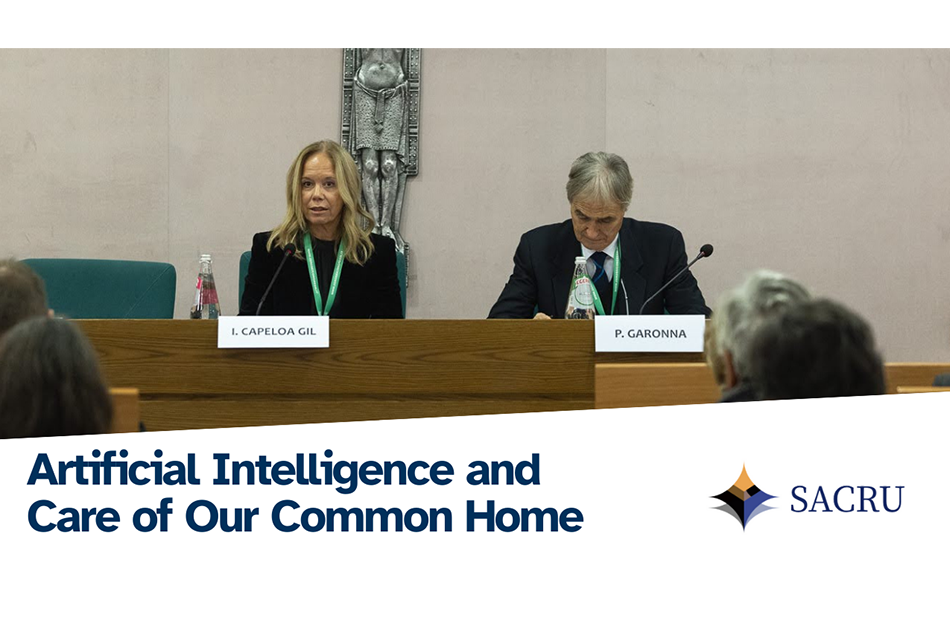
In the second session entitled “The AI in Industries, Finance, Education and Communication”, moderated by Pier Sandro Cocconcelli, Secretary General of SACRU, there were presentations by Laura Bononcini, Public Policy Director Southern Europe & Israel, Meta; Bruno Patino, Vice President ARTE GEIE and President ARTE France, and Florian Jug, Senior Group Leader and Head of Image Analysis Facility, Human Technopole.
“The topics addressed represent a commentary and response to some of the issues raised by the Holy Father in his address to the participants of this conference”, said Pier Sandro Cocconcelli, opening the discussion. In particular, he noted that ‘the ability to access vast amounts of data and information should not be confused with the ability to derive meaning and value from it’. This raises the central question: how can artificial intelligence be used as a tool to promote the ability to derive meaning and value in the respective fields, in businesses, in the media and in scientific research? A second fundamental issue raised by the Holy Father concerns collective responsibility: ‘How can we ensure that the development of artificial intelligence truly serves the common good, and is not just used to accumulate wealth and power in the hands of a few?’ The question touches on the risk of a concentration of economic and informational power and invites reflection on models of governance, regulation and ethical use of AI oriented towards the common good”.



.jpg)
.jpg)
.jpg)
.jpg)
.jpg)
.jpg)
.jpg)
.jpg)
.jpg)