News | Brescia
Quando l’intelligenza artificiale comincia a fare matematica
La risorsa più scarsa potrebbe non essere più la produzione matematica, ma l’attenzione competente necessaria per attribuirle significato
| Marco Squassina
16 settembre 2026
Condividi su:
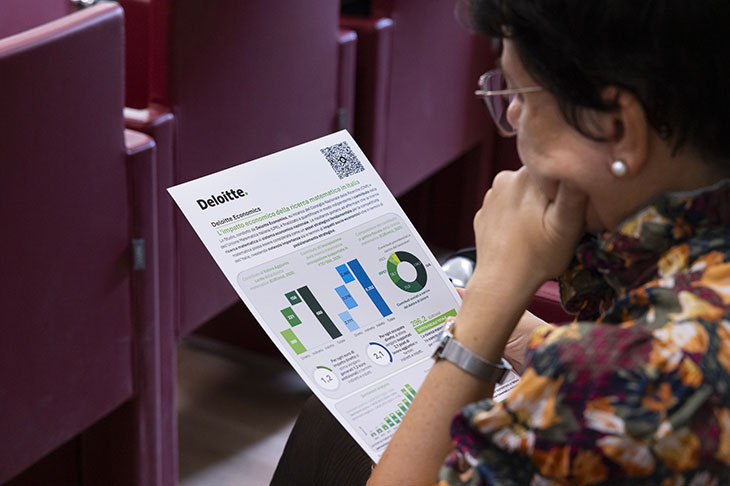
Mathematical research in Italy makes a direct economic contribution of €308.5 billion, supports 8.4 million jobs – equivalent to 35% of the country’s workforce –, contributes approximately €680 billion to GDP, and generates €296 billion in tax revenue, of which €134 billion is VAT.
And that’s not all: mathematical research in the Italian architecture and engineering sector is used by 71.9% of the people involved, the average annual growth rate of PhDs in mathematical sciences stood at 3.6% between 2017 and 2024, whilst AI projects a 1.8% increase in national GDP by 2035, amounting to approximately €38 billion.
These are some of the figures that emerged from the study “The Economic Impact of Mathematical Research in Italy”, carried out by Deloitte Economics on behalf of the Consiglio Nazionale delle Ricerche (CNR), the research national council, and the Unione Matematica Italiana (UMI), the Italian mathematical association, to independently quantify the contribution of mathematical research to the country’s economy.
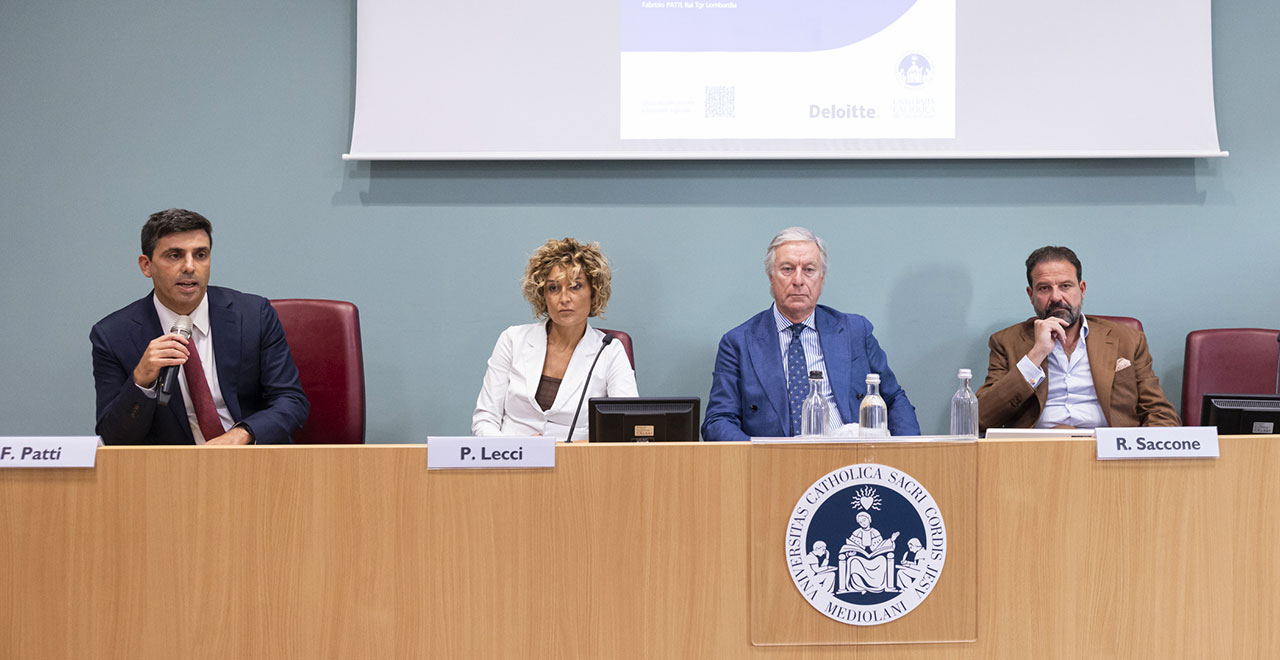
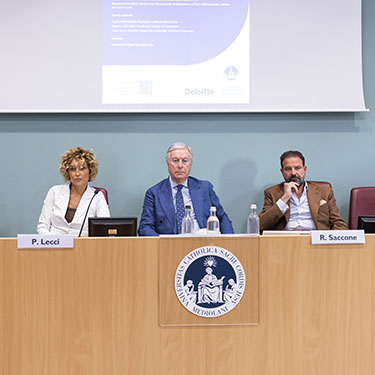
The report, presented in Brescia at the campus of Via Garzetta during the event “Non solo numeri: la matematica, un motore per l'economia”, was promoted by Università Cattolica in collaboration with the University's Faculty of Mathematical, Physical and Natural Sciences and, to better contextualise the abstract data within a real-world setting, representatives from the main local economic organisations were involved: Paolo Streparava, president of Confindustria Brescia, Roberto Saccone, president of Camera di Commercio di Brescia, and Paola Lecci, director of Regionale Lombardia Sud Intesa Sanpaolo.
It should be noted that the industrious province of Brescia – and with it the region of Lombardy – currently accounts for 25% of national GDP. Lazio ranks second, accounting for 11%.
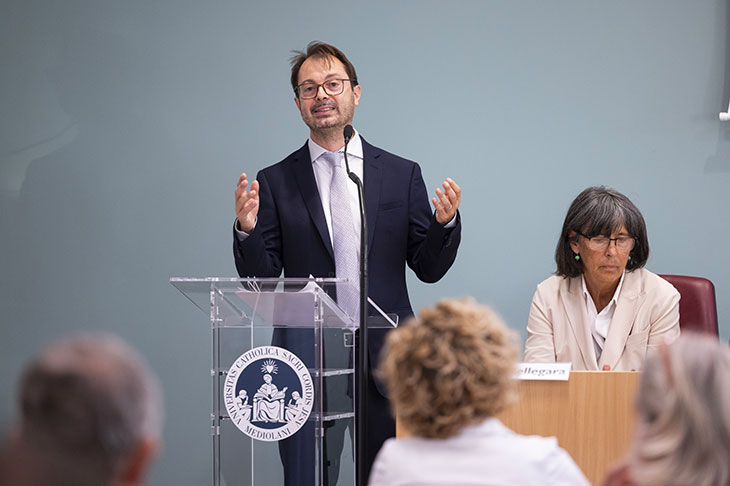
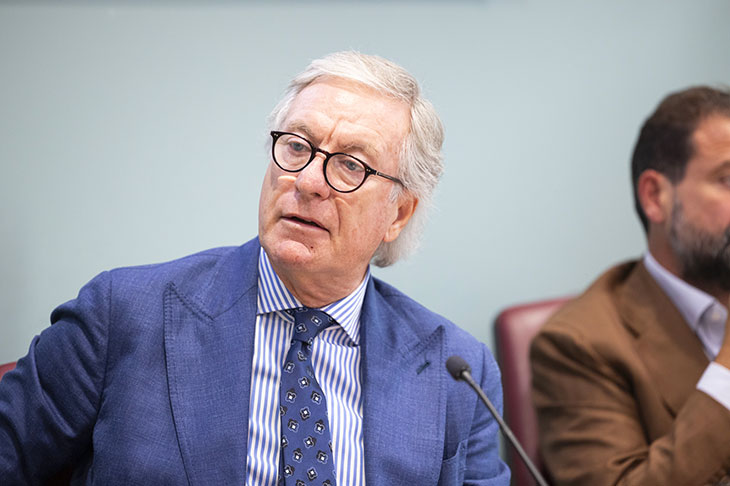
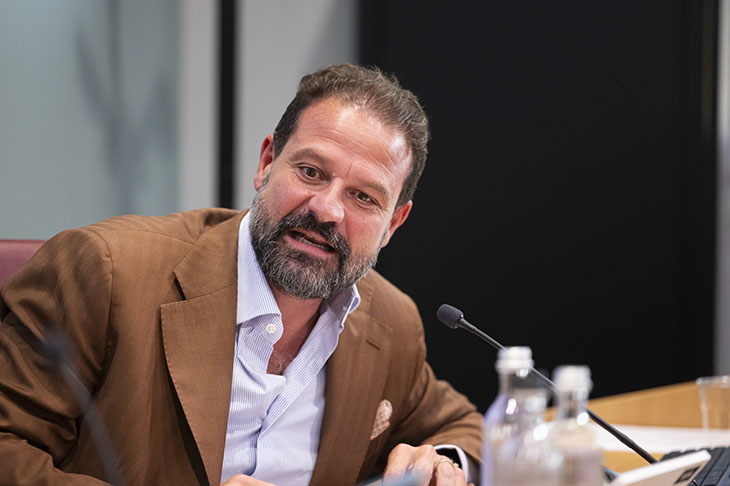
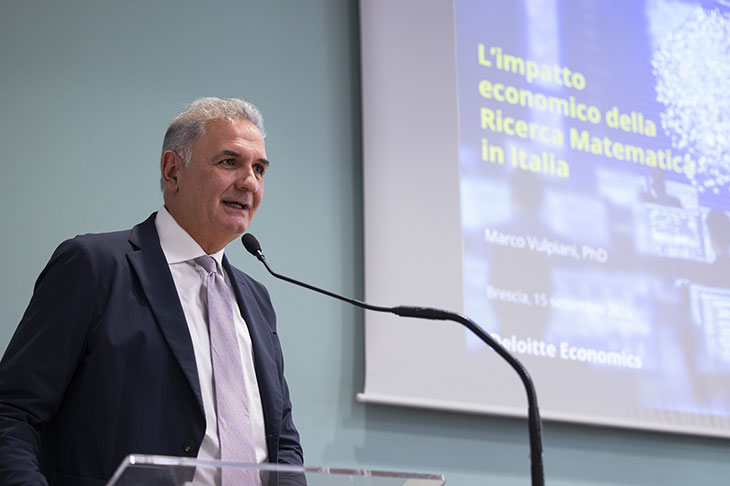
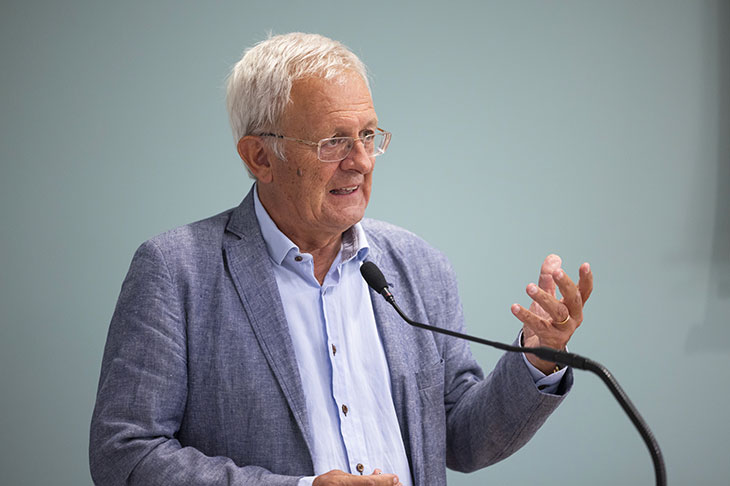
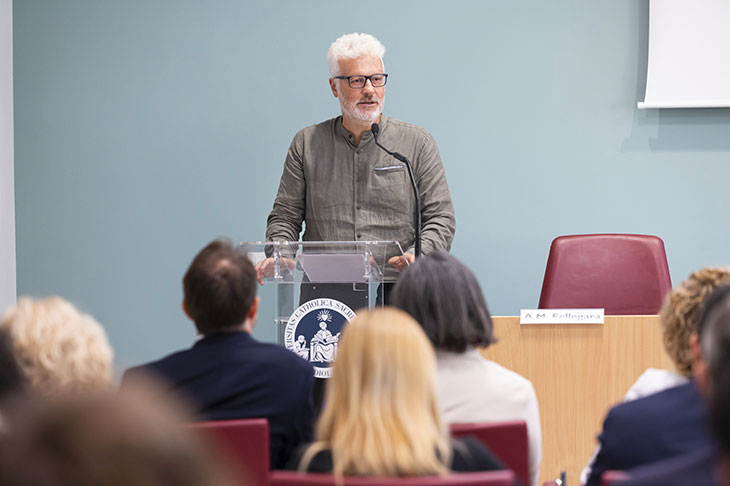
Following the opening remarks by Anna Maria Fellegara, Vice-Rector of Università Cattolica, who described mathematics as ‘the great invisible infrastructure of our society’, and by Claudio Giannetti, Dean of the Faculty of Mathematical, Physical and Natural Sciences, and the presentation of the research compiled by Marco Vulpiani, Head of Deloitte Economics, the debate touched on the topic of the professionals who are truly making a difference today, the role of AI, and the relationship between humanism and technology.
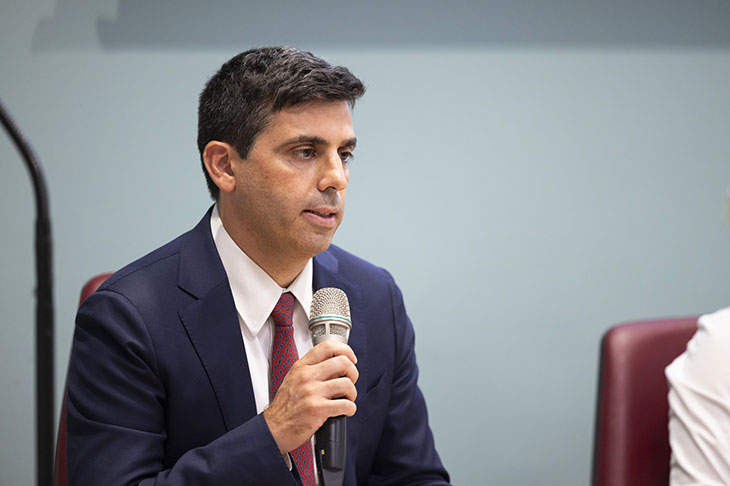
In conversation with Rai journalist Fabrizio Patti, Paolo Streparava had clear views: "We in the metalworking industry must not lose sight of the human side of mathematics: we see staff making extensive use of AI, but do we know how critically they assess it and to what extent they are prepared to question the tool? Data is nothing unless it becomes information within the company. There is no point in producing it and storing it in data centres if 85% of our businesses lack mathematicians capable of interpreting it."
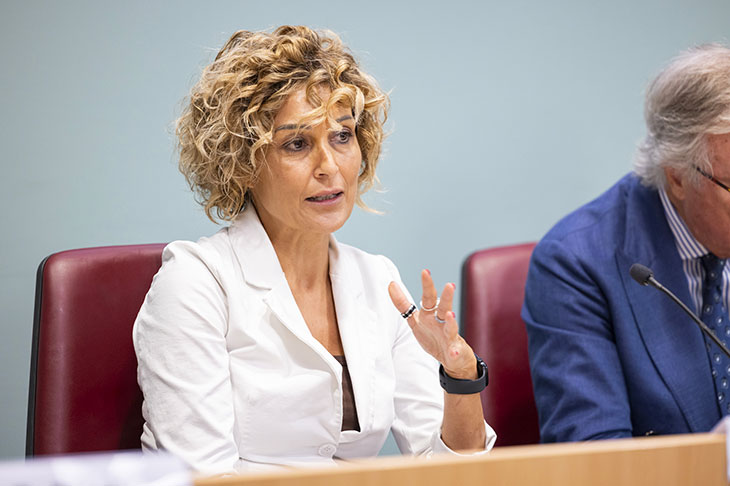
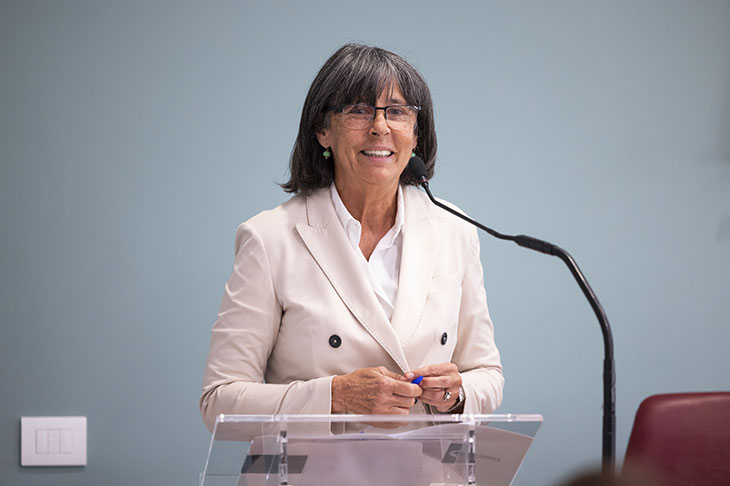
Paola Lecci works in a different sector but applies the same approach: “Mathematics is fundamental to the banking sector, which must transform data into decisions: assessing the risk of an investment, managing credit, preventing fraud and making predictive estimates on market trends and interest rates. It is a tool for creating protection and trust, but it must not replace human judgement. The winning approach is to combine data with people’s critical understanding of the sector. In practice, we must bring technology and critical thinking into dialogue so that we can master the former rather than be at its mercy.”
An article by

Many people are wondering whether AI is increasing or decreasing the need for staff.
According to Roberto Saccone, "a distinction must be made: when it comes to collating information, AI may suffice, but when the aim is to generate insights from which to make decisions, then critical thinking and the individual’s experience in the field are essential. This does not detract from the fact that there is a growing need for mathematical skills within Italian companies and across the globe; on the contrary, it reinforces the concept. I am not referring solely to the manufacturing sector; it is a need that cuts across all sectors of the economy of Brescia. Let's take agriculture as an example: it is no longer just the farmer with a spade, today it involves increasingly sophisticated technologies. The same applies to the worlds of services, commerce and medicine".
What is emerging, according to Lecci, is the view of AI as an element that can indeed help achieve a competitive advantage "but only provided we understand how to use it better than others". A tool, therefore, but certainly not a cure-all. Nor is it a solution to the real concern plaguing businesses across Italy: "the highest energy costs in the world", as Streparava pointed out.
La risorsa più scarsa potrebbe non essere più la produzione matematica, ma l’attenzione competente necessaria per attribuirle significato
| Marco Squassina
L’analisi commissionata a Deloitte Economics dal Consiglio Nazionale delle Ricerche (CNR) e dell'Unione Matematica Italiana (UMI) quantifica l’apporto della Ricerca Matematica all’economia italiana. 680 miliardi di euro, pari al 34% del Pil
| Bianca Martinelli
La presentazione della ricerca “L’impatto economico della ricerca matematica in Italia”, curata dalla facoltà di Scienze matematiche fisiche e naturali con la multinazionale Deloitte si terrà Martedì 15 settembre 2026 a Brescia
| Redazione