NEWS | Rome

Artificial Intelligence and Care of our Common Home

09 dicembre 2025

Artificial Intelligence and Care of our Common Home

Condividi su:

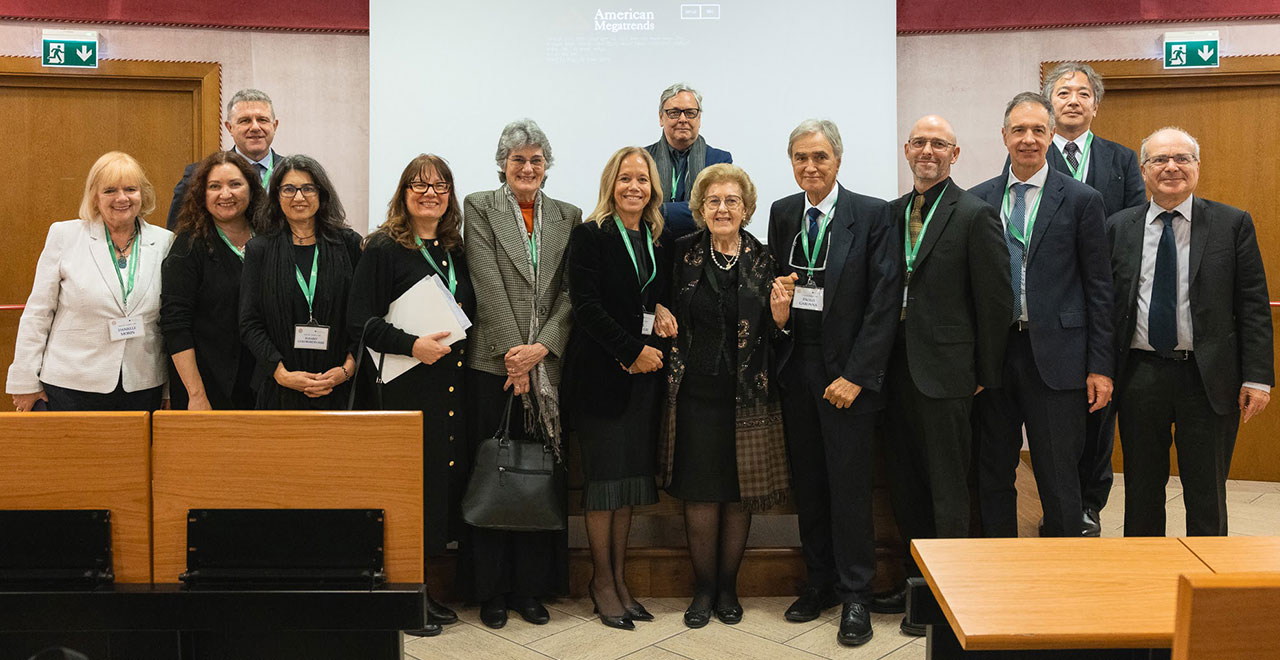
"We are meeting on the occasion of the publication of your research on a very important topic. The advent of artificial intelligence is accompanied by rapid and profound changes in society, which affects essential dimensions of the human person, such as critical thinking, discernment, learning and interpersonal relationships. How can we ensure that the development of artificial intelligence truly serves the common good, and is not just used to accumulate wealth and power in the hands of a few? As you are certainly aware, the most valuable commodity on the market today is in the field of artificial intelligence. This is an urgent question, because this technology is already having a real impact on the lives of millions of people, every day and in every part of the world. As the Social Doctrine of the Church reminds us, and as is clear from the interdisciplinary work you are doing, addressing this challenge requires asking an even more fundamental question: What does it mean to be human in this moment of history?” ‒ with these words, Pope Leo XIV welcomed participants to the conference entitled “Artificial Intelligence and Care of Our Common Home”, promoted by the Centesimus Annus Pro Pontifice Foundation and the Strategic Alliance of Catholic Research Universities (SACRU), which was held in the afternoon of 5 December at the Maria Santissima Bambina Institute in Rome.

The conference presented the research that gave rise to the volume “Artificial Intelligence and Care of Our Common Home: A Focus on Industries, Finance, Education and Communication” (Vita e Pensiero, Publisher), with an introduction by His Eminence Cardinal José Tolentino de Mendonça, Prefect of the Dicastery for Culture and Education, and developed jointly by the Centesimus Annus Pro Pontifice Foundation and the Strategic Alliance of Catholic Research Universities (SACRU), coordinated by Università Cattolica del Sacro Cuore. Initiated in 2024 at the invitation of Pope Francis, the research aimed to analyse and evaluate the impact of artificial intelligence, especially in the fields of industry, finance, education and communication, and to propose solutions to the main problems raised by its rapid and tumultuous development.

An article by

Federica Mancinelli

Federica Mancinelli

Condividi su:


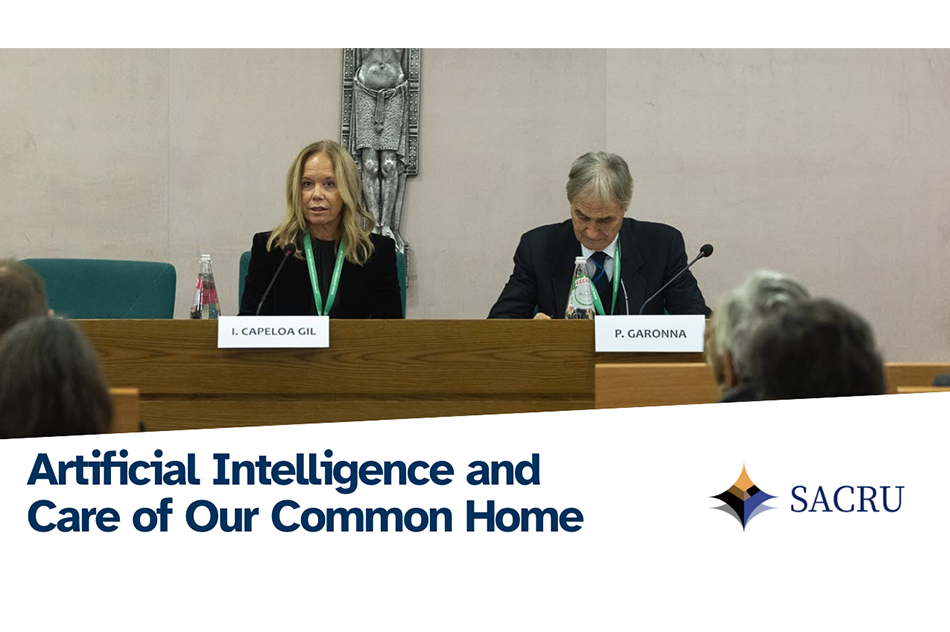
After institutional greetings from Isabel Capeloa Gil, President of SACRU, and Paolo Garonna, President of Centesimus Annus Pro Pontifice Foundation, there was an introductory speech by H.E. Mons. Paul Desmond Tighe, Secretary of the Dicastery for Culture and Education, and a presentation of the research by its coordinator, Anna Maria Tarantola.

Rector Elena Beccalli also sent a message of greeting to the participants: “Artificial intelligence has an ambivalent nature: it is a source of enormous opportunities but also of profound risks. The application of artificial intelligence to human decision-making introduces complexity and uncertainty. One of the primary sources of complexity arises from the integration of humans and machines in the decision-making process, which has raised concerns about intelligent machines potentially replacing human judgment. Beyond the human-machine relationship, AI also produces unintended and unforeseen effects in the economic and financial domains. One such effect concerns biodiversity, understood as the coexistence of alternative forms of economic and financial institutions within a given system. Another aspect concerns proximity, which relates to the concept of place. Place, in turn, is essential to shaping personal identity through autobiographical memory. Proximity as a spatial construct is at the basis of relationship lending. Therefore, artificial intelligence – which operates independently of physical location – undermines proximity, which forms the foundation of relational goods that are critically important in economic and financial systems.”


The first session, moderated by Andrea Monda, Director of L'Osservatore Romano, began with the presentation of the research paper “Artificial Intelligence and Care of Our Common Home” by Anna Maria Tarantola, who then spoke with co-authors Joseph Bonnici, Andrea Cosentini, Clarisse De Souza, Xavier Ferràs Hernàndez, Andrea Gaggioli, Elisabet Golobardes Ribé, William Hasselberger, Edgar Lyra, Mario A. Maggioni, Alejandra Marinovic, Mirella Mastretti, Giacomo Mazzone, Danielle Morin, Tetsuo Morishita and Giulia Schneider.

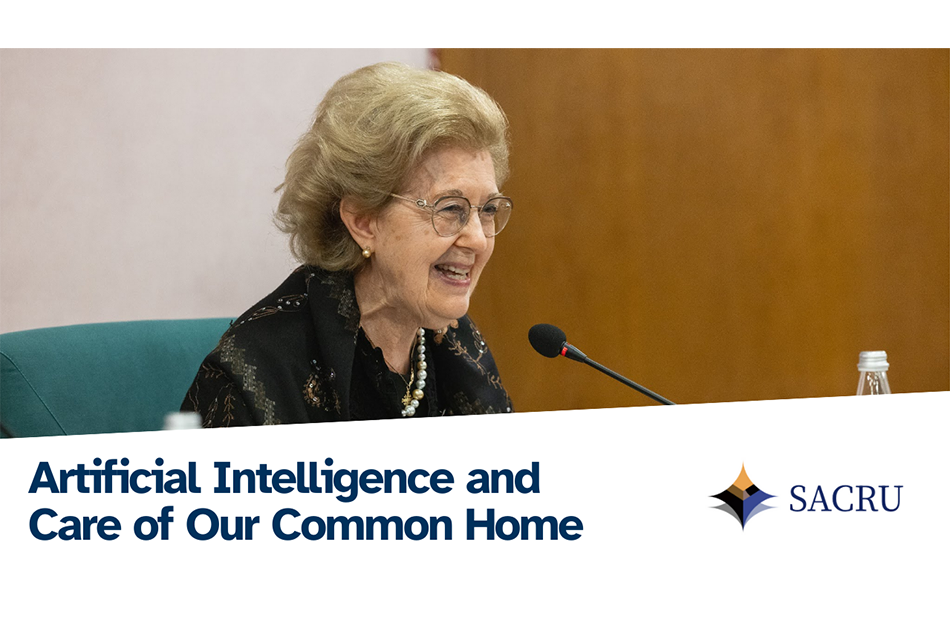
“The collection of contributions published is driven by a fundamental question in understanding and managing the potential harms of artificial intelligence: ‘What is AI for?’”, began Anna Maria Tarantola. Does AI serve humanity, improve well-being and support the integral development of individuals or does it primarily serve to enrich and consolidate the power of a few technological giants despite the risk of undermining humanity? This research addresses this question through a cross-disciplinary and anthropocentric approach, offering an in-depth analysis of how AI is conceived, developed and used.  A multidisciplinary analysis is crucial because technological evolution is fundamentally changing how we perceive experiences such as procreation, birth and death (as noted by Pope Francis at the XVII Inter-Christian Symposium, 28th August 2024). All contributions in this volume,” she continued, “are guided by ethical evaluation and inspired by the Social Doctrine of the Church (SDC), aiming to identify the most appropriate paths forward, even if this includes setting limits to innovation when it harms humanity. Science is not neutral, and neither is AI.”

“Our work for an AI that serves humanity and our common home doesn’t end here,” concluded Anna Maria Tarantola. “The complexity of the relationship between technological innovation and the humanity makes future lines of research necessary. I recall some of them: the study of the psychological and identity-related effects of interactions with generative systems and immersive environments (e.g., the metaverse); the analysis of the impact of regulatory policies (EU AI Act, UN guidelines, etc.) on the effective protection of people, especially children’s rights and eventually need of new regulation; an in-depth exploration of ‘AI literacy’ as a key competence for digital citizenship with particular attention to minors and most vulnerable groups; comparative investigations to understand how the dignity is expressed in different cultural and educational contexts; identifying whether and at what point to stop in the innovation process by evaluating the impact on the very existence of human beings; how to integrate technology and the human sciences, recovering the humanistic dimension of culture in a world increasingly characterized by a post-human culture in which people risk becoming obsolete; initiating a broad philosophical movement to understand the influence of the rapid and pervasive development of AI, especially generative AI, on the deepest structures of reality, on the fundamental questions of the very essence of human beings starting from the early childhood.”

In the second session entitled “The AI in Industries, Finance, Education and Communication”, moderated by Pier Sandro Cocconcelli, Secretary General of SACRU, there were presentations by Laura Bononcini, Public Policy Director Southern Europe & Israel, Meta; Bruno Patino, Vice President ARTE GEIE and President ARTE France, and Florian Jug, Senior Group Leader and Head of Image Analysis Facility, Human Technopole.

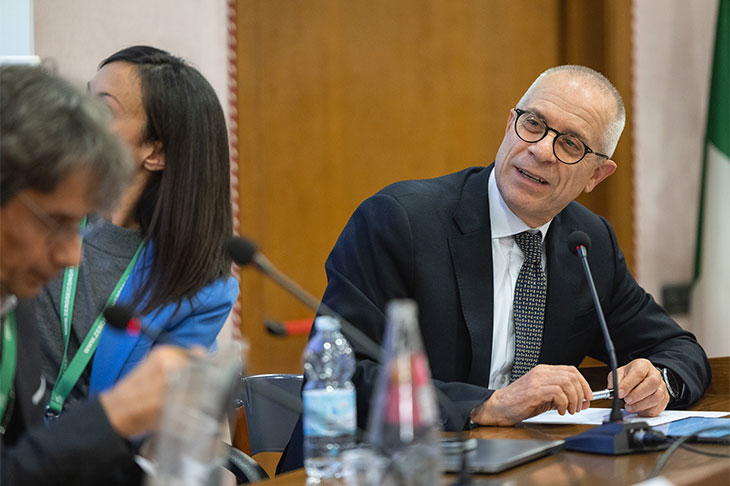
“The topics addressed represent a commentary and response to some of the issues raised by the Holy Father in his address to the participants of this conference”, said Pier Sandro Cocconcelli, opening the discussion. In particular, he noted that ‘the ability to access vast amounts of data and information should not be confused with the ability to derive meaning and value from it’. This raises the central question: how can artificial intelligence be used as a tool to promote the ability to derive meaning and value in the respective fields, in businesses, in the media and in scientific research? A second fundamental issue raised by the Holy Father concerns collective responsibility: ‘How can we ensure that the development of artificial intelligence truly serves the common good, and is not just used to accumulate wealth and power in the hands of a few?’ The question touches on the risk of a concentration of economic and informational power and invites reflection on models of governance, regulation and ethical use of AI oriented towards the common good”.

The research project “Artificial Intelligence and Care of Our Common Home”

With an international and multidisciplinary perspective, the research brings together contributions from seventeen academics and experts from ten universities and two organisations based in nine countries around the world. The contributions aim to analyse the development and use of artificial intelligence in the fields of industry, finance, education and communication. Inspired by the teachings of Pope Francis and Pope Leo XIV, the work aims to identify the risks, distortions and inequalities generated by the unethical and unregulated production and use of artificial intelligence. At the same time, it seeks to explore the conditions necessary for responsible and ethically oriented innovation, placing technology at the service of the common good and in full respect of human dignity.

The text of the Address of His Holiness Pope Leo XIV to the participants in the conference "Artificial Intelligence and Care of Our Common Home"

“The strong acceleration of artificial intelligence challenges us not only to consider the immense potential of this technology, but also to inquiry how it is transforming human life, society, and our collective responsibility toward the planet”, said Andrea Gaggioli, Professor of General Psychology at Università Cattolica and peer reviewer of the research. “To address this question, the volume ‘Artificial Intelligence and Care of Our Common Home’ brings together international authors who provide a multidisciplinary reflection rooted in Catholic tradition and open to the global scientific community. The book emphasizes AI’s profound impact on rights, responsibilities and human relationships. Through the diverse lenses gathered in this volume, AI emerges as a cultural, social, and spiritual challenge that demands careful discernment. The authors highlight new forms of vulnerability within the digital economy, as well as the dual nature of AI itself: on the one hand, it can enhance creativity, foster connection, and expand access to education; on the other, it can intensify polarization and further weaken an already fragile democratic dialogue”.

“Artificial Intelligence and Care of Our Common Home: A Focus on Industries, Finance, Education and Communication" | Download

“We, as individuals and local and global communities, are called to live through the strongest and fastest technological revolution yet, even a change in scientific paradigm”, added Alejandra Marinovic, Professor at the Institute of Applied Ethics at the Pontifical Catholic University of Chile and peer reviewer of the research. “The way humans relate, learn, communicate, and create is changing vertiginously with artificial intelligence, posing a fundamental challenge to humanity, full of lights and perils. Central questions in these times are what is truly human and how to inhabit our common home. The volume ‘Artificial Intelligence and Care of Our Common Home’ is a rich and timely contribution to these debates, deepening the dialogues among faith, culture, and reason. It offers interdisciplinary research from diverse and essential perspectives, developed by experts around the world, in an open and familiar language. Catholic Social Thought appears both as a common thread and an ethical proposal. This volume invites us all to inform ourselves and to reflect on the profound impact of artificial intelligence systems; it calls for hope, care, and action in various aspects of human life and our planet, towards the common good”.

Newsletter

Scegli che cosa ti interessa
e resta aggiornato

Iscriviti