A nasal spray containing vesicles naturally released by cells could be effective against Alzheimer’s disease. This is the promising result emerging from a study conducted by researchers at Università Cattolica del Sacro Cuore, Fondazione Policlinico Universitario A. Gemelli IRCCS and the E. Menni Research Centre of Fondazione Poliambulanza.
The spray is based on extracellular vesicles derived from the amniotic membrane: in the study, published in the journal Translational Neurodegeneration (published by Nature), it was shown, in an experimental model of Alzheimer’s, that the spray is capable of reaching the brain, counteracting neuroinflammation, protecting neuronal function and preserving memory. The researchers also achieved positive results on human neurons in test tubes.
The researchers demonstrated that these nanovesicles, when administered intranasally to an animal model that replicates the clinical picture of Alzheimer’s disease, reach the hippocampus – a region of the brain crucial for memory and particularly vulnerable in Alzheimer’s – where they are absorbed by both neurons and microglia, the cells that play a key surveillance and defence role in the brain. The beneficial effects of this treatment extend to various aspects of the disease, from neuroinflammation modulation to the protection of the function of neurons and, in particular, synapses – the connections that ensure the transmission of information within neural circuits – resulting in a significant improvement in cognitive abilities. Of particular interest is the observation that extracellular vesicles are capable both of preventing the onset of memory deficits and of counteracting cognitive decline once it has already set in.
The work stems from the synergy between two lines of research carried out at Università Cattolica del Sacro Cuore, Fondazione Policlinico Universitario A. Gemelli IRCCS and the E. Menni Research Centre of Fondazione Poliambulanza.
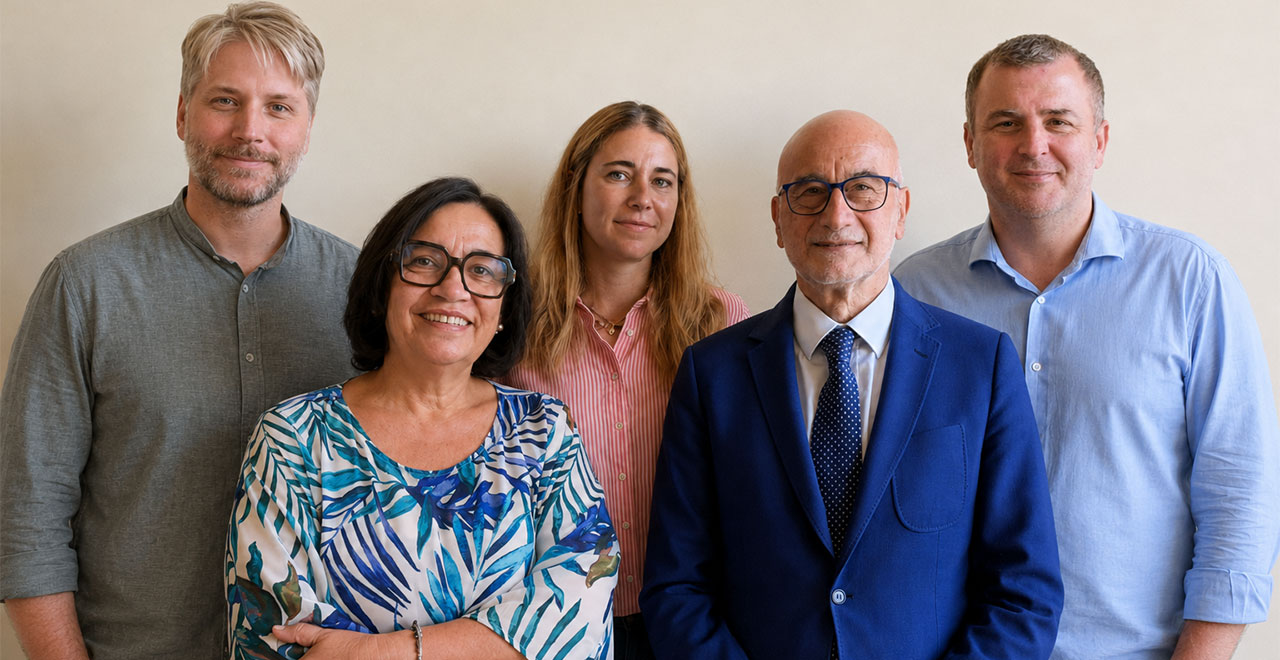
On the one hand, the studies by the group led by Professor Ornella Parolini, Professor of Applied Biology at Università Cattolica del Sacro Cuore and Scientific Director of the ‘Casa Sollievo della Sofferenza’ IRCCS Hospital, who has been studying, for many years, the placenta and, in particular, the cells of the amniotic membrane and the set of factors released by these cells, known as the secretome, investigating their protective and regenerative effects in various experimental models. The E. Menni Research Centre of Fondazione Poliambulanza, directed by Professor Parolini, contributed to this line of research by providing its expertise in the isolation and characterisation of cells and in the identification of the set of molecules they produce (secretome).
On the other hand, the well-established expertise on the role of neuroinflammation and altered brain plasticity in neurodegenerative diseases provided by the group led by Professor Claudio Grassi, Full Professor of Physiology and Director of the Department of Neurosciences at Università Cattolica, was fundamental too. Within this group, Professor Salvatore Fusco, Associate Professor of Physiology, coordinates studies on the cellular and molecular mechanisms underpinning the effects of extracellular vesicles in the central nervous system.
The contribution of the Fondazione Policlinico Universitario A. Gemelli IRCCS was particularly important in giving the study a translational dimension. At the Clinica della Memoria (memory clinic) of the Policlinico, skin biopsies were collected from patients with Alzheimer’s disease and from healthy subjects, from which pluripotent stem cells and, subsequently, human neurons were generated. This made it possible to verify the protective effects of the vesicles in human experimental models as well.
The lead authors of the study are Dr Andrea Papait, researcher in Cell and Applied Biology, and Dr Francesca Natale, researcher in Physiology, who worked to integrate these two fields of research, linking the biology and immunomodulatory properties of amniotic-derived extracellular vesicles with their effects on neuroinflammation, neuronal function and memory.
THE RESULTS
Administered via a nasal spray, the vesicles reached the hippocampus and were absorbed by both neurons and microglia. The treatment does not simply ‘switch off’ the immune response: rather, it remodels the inflammatory microenvironment, altering the functional state and morphology of microglia and creating conditions favourable to the maintenance of neuronal integrity and function.
The effects of the treatment particularly affect the molecules involved in the synaptic function. In both the hippocampus of mice and in the treated human neurons, there were increased levels of proteins closely linked to neuronal plasticity, synaptic transmission efficiency and memory processes.
These findings therefore indicate a clear correlation between the modulation of brain inflammation and the restoration of molecular conditions conducive to the function of neuronal networks. Indeed, the effects observed at the cellular and molecular levels were associated with an improvement in cognitive performance, as assessed through tests of recognition memory, spatial memory and working memory.
A NEW PERSPECTIVE
"The study suggests the need to direct research into Alzheimer’s therapies by focusing not only on counteracting the accumulation of proteins characteristic of the disease, such as beta-amyloid and tau, but also by paying close attention to the cellular environment in which neurons reside (e.g. microglia and astrocytes) and to the molecular signals (e.g. cytokines or microRNAs) that these cells exchange and which may influence the synaptic function,” explains Professor Fusco.
“These are preclinical findings that require further validation in humans and do not yet represent an available treatment for Alzheimer’s disease, but they point in a very promising direction: understanding whether some of the mechanisms through which the placenta naturally regulates inflammation and protects tissues might offer new tools for the treatment of neurodegenerative diseases and, more generally, whether the use of extracellular vesicles represents a new frontier for the treatment of neurological disorders", concludes Professor Grassi.