Can you explain in simple terms why climate change risks increasing conflicts between farming communities in Cameroon?
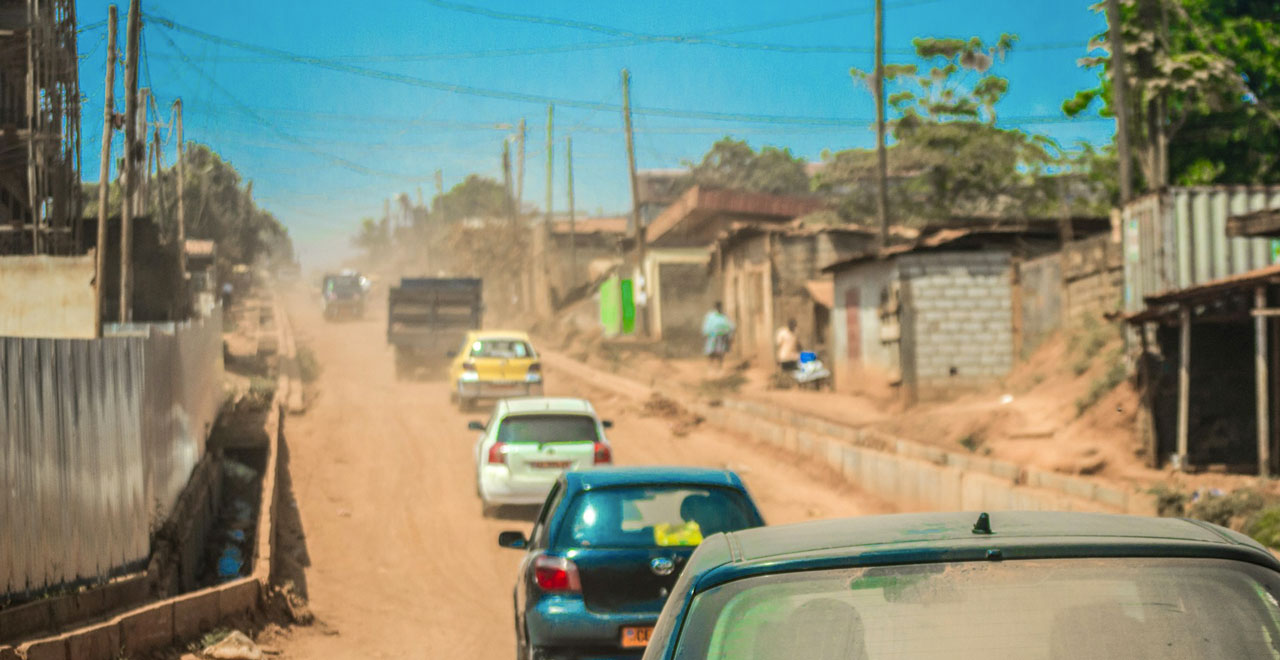
Climate change can increase tensions between farming communities because climate disasters hinder access to essential resources such as water and fertile land. Longer droughts, irregular rainfall, floods, and rising temperatures reduce crop yields and make farming less reliable. When grazing land decreases, communities that depend on agriculture for survival may begin competing over rivers, wells, or productive land. These rivers, wells, and arable land are the landmarks that I examined in my PhD research. Due to the devastating effects of climate change, in Cameroon, there are some regions where resources such as arable land and water have limited access, and this limited access creates new disputes between neighboring groups and also between pastoralists and farmers who need land for pasture and for crop cultivation.
Why did you choose this particular topic for your thesis?
I chose this topic because of my passion for land conflict resolution and climate change adaptation. Nowadays climate change mainly happens because humans release large amounts of greenhouse gases into the atmosphere. So it becomes important for us to develop innovative solutions that will help people to enhance their adaptive capacities for an effective adaptation to climate change. Moreover, many natural disasters become more frequent and intense because of the way people use land. The efficient use of land is very important to help prevent the occurrence of natural disasters. But the inappropriate use of land causes land conflicts between neighbors and between pastoralists and farmers. Therefore, my PhD research developed four frameworks that help to resolve land conflicts and enhance the adaptive capacities of rural communities in Cameroon.
What has your educational background been?
My educational background is as follows: I have a postgraduate diploma in environmental management, which I obtained from the Technical University of Dresden in 2023. Then I have a certificate of competency in land governance, which I obtained in 2021 from the University of the Western Cape in South Africa. In 2017, I obtained a master's degree in human rights and sustainable development from the Catholic University of Central Africa in Cameroon. And finally, I have a bachelor's degree in peace and development studies, which I obtained in 2014 at the Protestant University of Central Africa (PUCA) in Cameroon.
What did you learn during your PhD at Università Cattolica del Sacro Cuore?
My PhD studies at Università Cattolica del Sacro Cuore enabled me to attend some specialized lectures on agri-food value chains and agri-food data, which helped me to quantify and understand the food crop production losses that occur in communities that face serious land conflicts and climate disasters. In the first year of my training when I began to write my PhD thesis, my supervisor emphasized the importance of having a good theoretical understanding and a good methodological approach. The mastery of the theories and the methodology in land governance and climate adaptation research greatly helped me to write a good PhD thesis in three years. Finally, the interdisciplinary and internationally oriented nature of this PhD program enabled me to meet and network with PhD researchers from Uganda, Ethiopia, South Africa, Mali, Ghana, Italy, and Mozambique.
What is the added value for a researcher of having had the opportunity to specialize at a European university?
The added value that a researcher has when he/she specializes in a European university is that this researcher gets to be exposed to a large and bigger community of researchers who are working on issues that are similar to his/hers, though in different regions and continents. The second added value is that the equipment and tools that the researcher uses in the laboratory are more recent and more performant than those found in the countries of the third world. The third added value is that when the researcher has to publish the results of his/her research in a high-impact-factor journal, the journal turns to give good credibility to researchers who specialize in a European university. The fourth and last added value is related to the research environment in European universities, which is unique compared to the universities in the other continents.
What are your future plans?
My plan is to become a full-time university professor with an entire research group (team), which I will coordinate under a specific department in one of the top universities in my country, Cameroon. But before becoming a full professor, I have to climb all the rungs of the academic ladder; that is, I have to go through all the stages of academia by handling each role successfully. These roles are postdoctoral researcher (postdoc); assistant lecturer (or research fellow in some universities); assistant professor (or lecturer in Commonwealth systems); associate professor (or senior lecturer); and full professor (professor or chair professor).
Would you prefer to pursue an academic career abroad or in your home country?
I want to pursue an academic career both abroad and in my home country because obtaining a postdoc position of two to five years abroad will enable me to build very strong networks with renowned scholars who have extensive experience in my field of research. These strong networks, which I will succeed in building while working abroad, will be of great benefit to my home university whenever we want to apply for and participate in great research symposiums, conferences, and projects.