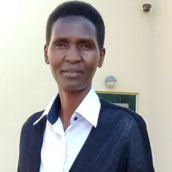
What is the most important result of your thesis?
Enriched soilless systems using waste-derived substrates (charcoal dust and coffee husks) significantly improved the nutritive profiles of leafy vegetables. Inorganic fertilizers enhanced protein and fibre, while organic inputs boosted carbohydrate and iron. Vigna unguiculata L. (cowpea) showed resilience and stable protein due to nitrogen fixation, while Amaranthus viridis L. (amaranth) and Brassica oleracea L. (collard) benefited from tailored substrates. Findings support sustainable food security and guide future agricultural, environmental, and food policy
Based on your study, what would you recommend to policy makers in your country?
Uganda should promote enriched soilless cultivation using waste-derived substrates like charcoal dust and coffee husks, combined with strategic fertilizer regimes. This approach enhances vegetable nutrition, recycles waste, reduces soil degradation, and supports urban farming. Policies should integrate soilless systems into national food and environmental strategies to strengthen food security and climate resilience.
What has your educational background been?
I began my academic journey with a Diploma in Secondary Agriculture Training (Agriculture Double Main) from the Institute of Teacher Education, Kyambogo, Uganda (1996). Building on this foundation, I earned a Bachelor of Education in Agriculture (Double Main) from Makerere University, Uganda (2001), strengthening both my teaching and technical expertise in agricultural sciences. To advance my specialization, I pursued a Master of Science in Agroecology at Uganda Martyrs University (2017), where I focused on sustainable farming systems and ecological approaches to agriculture. I successfully completed my PhD in Agro-Food Systems at Università Cattolica del Sacro Cuore, Italy, in April 2026.
What did you learn during your PhD at Università Cattolica del Sacro Cuore?
During my PhD in Agro-Food Systems at Università Cattolica del Sacro Cuore, Italy, I gained advanced expertise in sustainable agriculture, food system resilience, and resource-efficient cultivation. I learned how waste-derived substrates and innovative soilless methods can improve nutrition, reduce environmental impact, and strengthen food security. The program deepened my ability to link scientific research with agricultural policy, environmental sustainability, and food security strategies for practical impact.
What is the added value of studying at a European university?
Studying at a European university provided added value through exposure to diverse perspectives, advanced research facilities, and international collaboration. At Università Cattolica del Sacro Cuore in Italy, I gained access to cutting‑edge knowledge in agro‑food systems, learned from global experts, and built networks that connect science with policy innovation. This experience strengthened my ability to apply sustainable solutions to Uganda’s agricultural challenges, linking local practice with global standards and enhancing impact on food security and environmental sustainability.
What are your future professional plans?
Building on my PhD in Agro‑Food Systems (Università Cattolica del Sacro Cuore, Italy, April 2026), I intend to pursue post‑doc studies to deepen expertise in sustainable agriculture through innovative soilless cultivation using waste‑derived substrates. My goal is to improve nutrition, reduce environmental degradation, and strengthen food security in Uganda and Africa. I will integrate scientific innovation with policy development and farmer training, expanding global collaborations and translating research into scalable, climate‑resilient food systems.
Will you remain in your country, or are you considering pursuing a career abroad?
My primary commitment is to remain in Uganda, applying the knowledge and networks gained during my PhD in Italy to strengthen sustainable agriculture, food security, and policy development at home. However, I also value international collaboration and will continue engaging in global research partnerships and knowledge exchange to ensure Uganda benefits from worldwide innovations while contributing to global food system resilience.